Omnisend vs Drip: 5 Head-to-Head Comparisons for Ecommerce
Omnisend vs Drip comes down to channels, price at your list size, and how much workflow flexibility you need. Omnisend suits stores that want email, SMS and push notifications in one tool, a free plan to start on, and ready-made flows. Drip suits stores that want an ecommerce CRM, every feature at one price, and a workflow builder that reviewers rank as the simplest of the group. Either works for a Shopify, WooCommerce or BigCommerce store, but they reward different kinds of stores.
Most comparison pages are written by one of the vendors, so each one conveniently finds that its own product wins. Chromex is an official Omnisend partner, and we run email and SMS programs for ecommerce brands, so you should weigh our view with that in mind. What follows sticks to facts you can check on each vendor's pricing and feature pages.
Below are five head-to-head comparisons: features and channels, automation, pricing, ratings and ease of use, and which store each tool fits. Each one ends with a clear verdict. Prices change often, so confirm current figures on the vendors' own pricing pages before you buy.
1. Features and channels
Omnisend offers more channels out of the box, while Drip offers more variety in onsite offers. Both cover the core of ecommerce email: segmentation, product-based content and store integrations.

Omnisend
Omnisend is built for ecommerce and puts email, SMS and push notifications in one account. Its sign-up tools include a Wheel of Fortune pop-up and a library of form templates, and it connects to Shopify, WooCommerce and BigCommerce.
- Email builder with product blocks and discount codes
- Pop-ups, forms and landing pages for list growth
- Segmentation based on shopping behavior
Drip
Drip describes itself as an ecommerce CRM, which means customer and order data sits at the center and campaigns are built around it. Drip's own comparison page lists onsite tools such as mystery offers, countdown timers, slide-ins and giveaways. It handles email and SMS and integrates with the major store platforms.
- Customer profiles tied to purchase history
- Onsite campaigns beyond a basic pop-up
- Email and SMS in one workflow
Verdict
Pick Omnisend if you want push notifications and a simple multichannel setup. Pick Drip if onsite incentives are central to how you grow your list. For most stores the channel mix matters more than the gadget count.
Choose the platform whose channels match where your customers already respond.
2. Automation and workflows
Drip gives you more freedom to build custom logic, while Omnisend gets standard flows live faster. Reviewers who compare both tend to rank Drip's workflow interface as the simplest, with Omnisend close behind.
Omnisend
Omnisend ships pre-built automation workflows for the sequences most stores need first: welcome, abandoned cart, browse abandonment, order follow-up and win-back. A single workflow can mix email, SMS and push steps, so you do not run separate sequences per channel.
- Ready-made templates you can switch on in minutes
- Multichannel steps inside one workflow
- Triggers based on store events
Drip
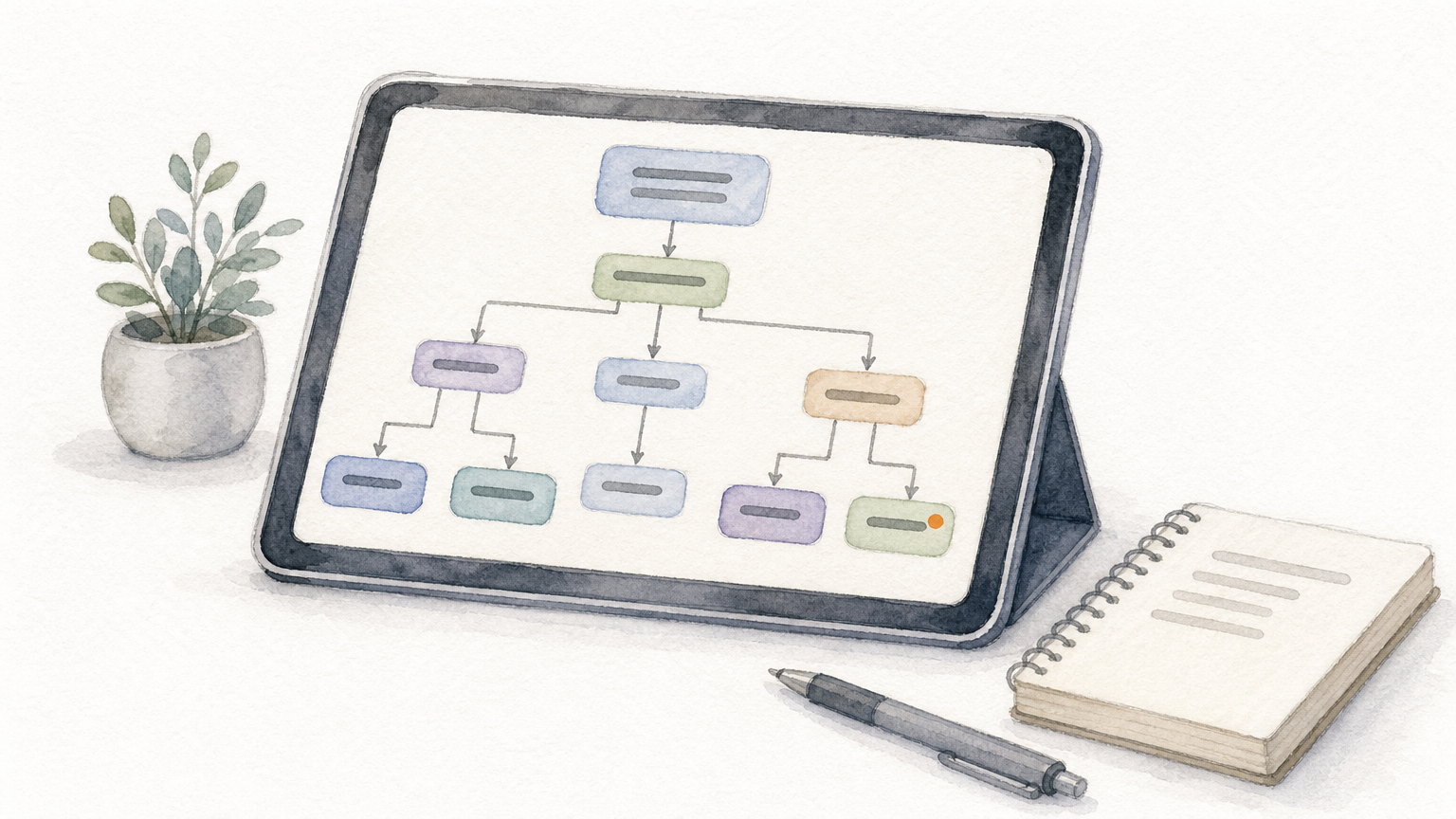
Drip's visual workflow builder is its strongest feature. You build on a canvas with triggers, rules, tags and splits, and you can branch on almost any customer or order attribute.
- Event and tag-based triggers
- Conditional branching and split paths
- Workflows reusable across campaigns
Verdict
Drip wins for stores with unusual customer journeys, such as subscription products or multi-step upsells. Omnisend wins when you want standard lifecycle flows running this week. In our work, the platform matters less than the 8 core automated sequences you build on it, and both tools can run them well.
Flows produce the revenue, so pick the builder you will actually keep refining.
3. Pricing
Omnisend is cheaper to start and has a free plan, while Drip is simpler to understand because every feature is included. The figures below were the entry prices at last check, so confirm them before you decide.
Omnisend
Omnisend has Free, Standard, Pro and custom Enterprise plans. The free plan covers 250 contacts and 500 emails a month. Paid plans start at about $16 a month for Standard and $59 for Pro, and your price rises with list size and sending volume. SMS is billed by usage, so budget text messages separately.
Drip
Drip has no free plan, but it offers a free trial. Pricing starts at $39 a month and covers up to 2,500 contacts. Every feature is available on every plan, and the price rises only as your contact count grows. SMS is also billed by usage.
| Omnisend | Drip | |
|---|---|---|
| Free plan | Yes (250 contacts, 500 emails/month) | No (trial only) |
| Entry paid price | About $16/month (Standard) | $39/month |
| Higher tier | About $59/month (Pro) | Same features at every tier |
| Pricing driver | Contacts and email volume | Contacts |
| SMS | Billed by usage | Billed by usage |
Verdict
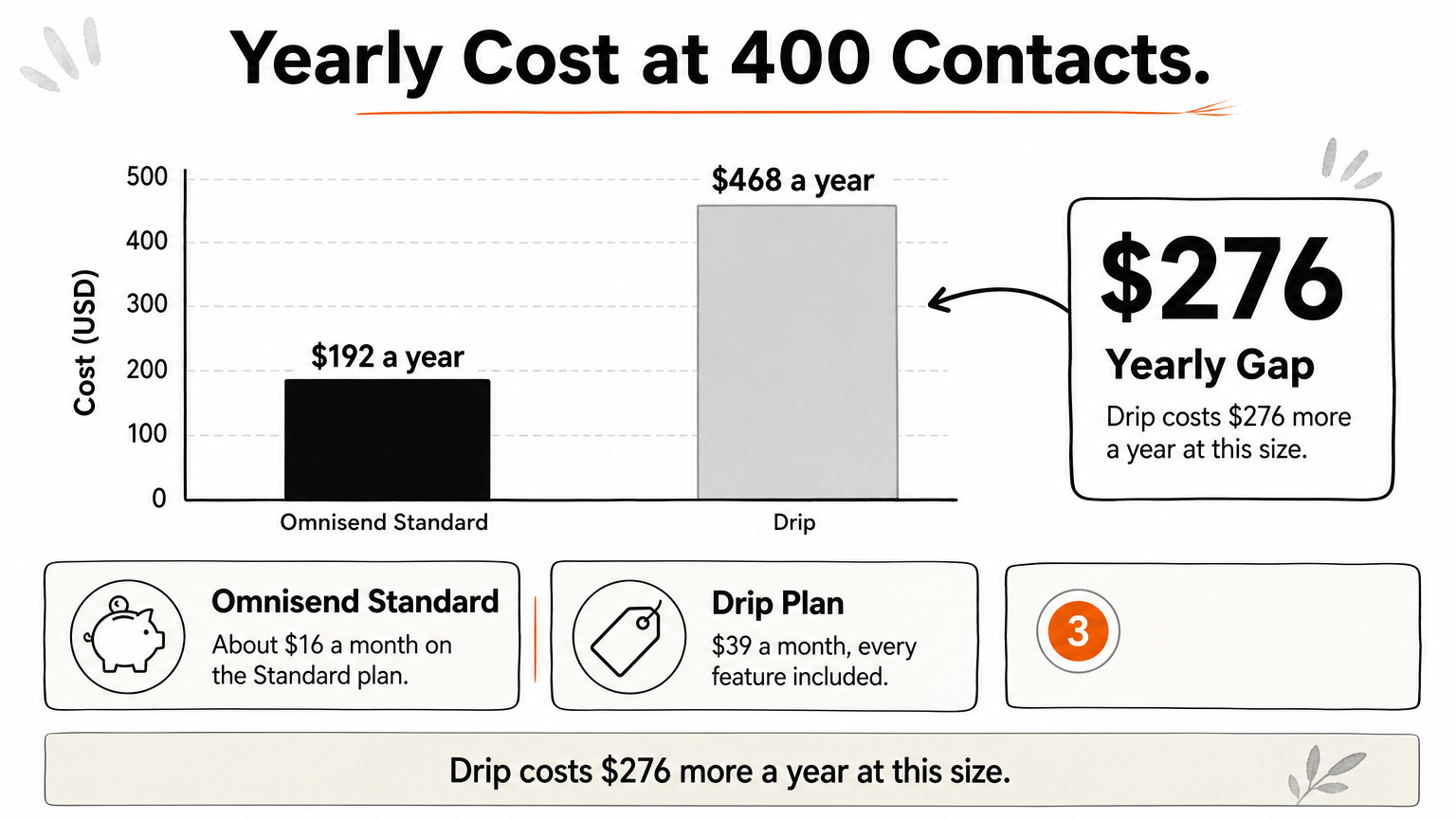
Take a store with 400 contacts. On Omnisend Standard it pays about $16 a month, or $192 a year. On Drip it pays $39 a month, or $468, a gap of $276 a year. If you have fewer than 250 contacts and send under 500 emails a month, Omnisend costs nothing. As your list nears 2,500 contacts, Drip's single price becomes more competitive, so compare both at your real list size.
Omnisend is cheaper at the start, and Drip's flat feature set is easier to forecast as you grow.
4. Ratings and ease of use
Omnisend has the bigger user base and the higher satisfaction scores in the comparison data, while Drip has the cleaner workflow interface. Neither has a serious usability problem.
Omnisend
Omnisend is used by more businesses. 6sense puts its share of the online marketing category at 1.17%, against 0.31% for Drip. An older StackUp comparison found its users more satisfied on average, at 74.42% versus 65.28%. A larger base also means more templates, tutorials and agency experience to draw on.
Drip
Drip's reviews often praise the workflow builder. One ecommerce platform comparison called it the simplest workflow interface among the tools it tested, with Omnisend close behind. The tradeoff is a smaller community, which means fewer third-party guides and fewer people who know the tool well.
| Measure | Omnisend | Drip |
|---|---|---|
| Category share (6sense) | 1.17% | 0.31% |
| User satisfaction (StackUp, 2023) | 74.42% | 65.28% |
| Workflow interface | Close second | Rated simplest |
Verdict
Omnisend takes ratings and ecosystem, Drip takes workflow simplicity. Treat the numbers as a tiebreaker only, because review scores measure onboarding and support more than revenue.
Ratings tell you how pleasant a tool is, not how much money it will make you.
5. Which one fits your store
Choose Omnisend if you are starting small or want more channels, and choose Drip if you want custom logic and one predictable price. The right pick depends more on your store's stage than on any feature list.
Omnisend
Omnisend fits new and growing stores that want a quick launch, a free tier and push alongside email and SMS. It also suits a store that wants standard flows without much builder work. If you go this route, sign-ups through Chromex's partner link get 20% off the first 2 months, offered as cashback.
Drip
Drip fits stores with custom customer journeys and a team that likes to build in a canvas. It also suits owners who dislike plan tiers and want every feature from day one, and it works best once your list is large enough to justify the $39 floor.
Verdict
| Your situation | Better pick |
|---|---|
| Under 250 contacts, tight budget | Omnisend |
| Want email, SMS and push together | Omnisend |
| Need complex branching logic | Drip |
| Want one price with every feature | Drip |
| Want the larger user base and community | Omnisend |
If two rows apply to you, weigh pricing at your real list size first. Migration later is possible but costs time and some sender reputation, so it is worth choosing deliberately.
Match the tool to your store's stage today, not to the store you hope to be in three years.
The right platform is the one you run well
Omnisend wins on channels, entry price and ecosystem. Drip wins on workflow flexibility, onsite offers and simple feature access. For most small and mid-sized stores starting out, Omnisend is the safer default. For stores with unusual journeys and a growing list, Drip earns a close look.
Whichever you choose, the platform is only the container. Results come from the flows, the sign-up form, the deliverability setup and the testing you do after launch. If you would rather hand that work to a team that does it every day, talk to Chromex about running your email and SMS program.